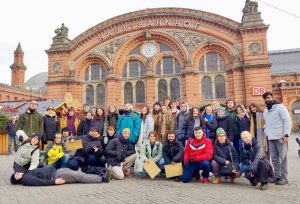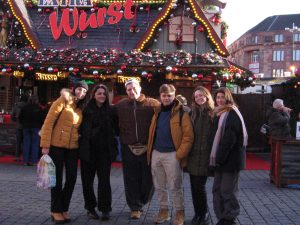
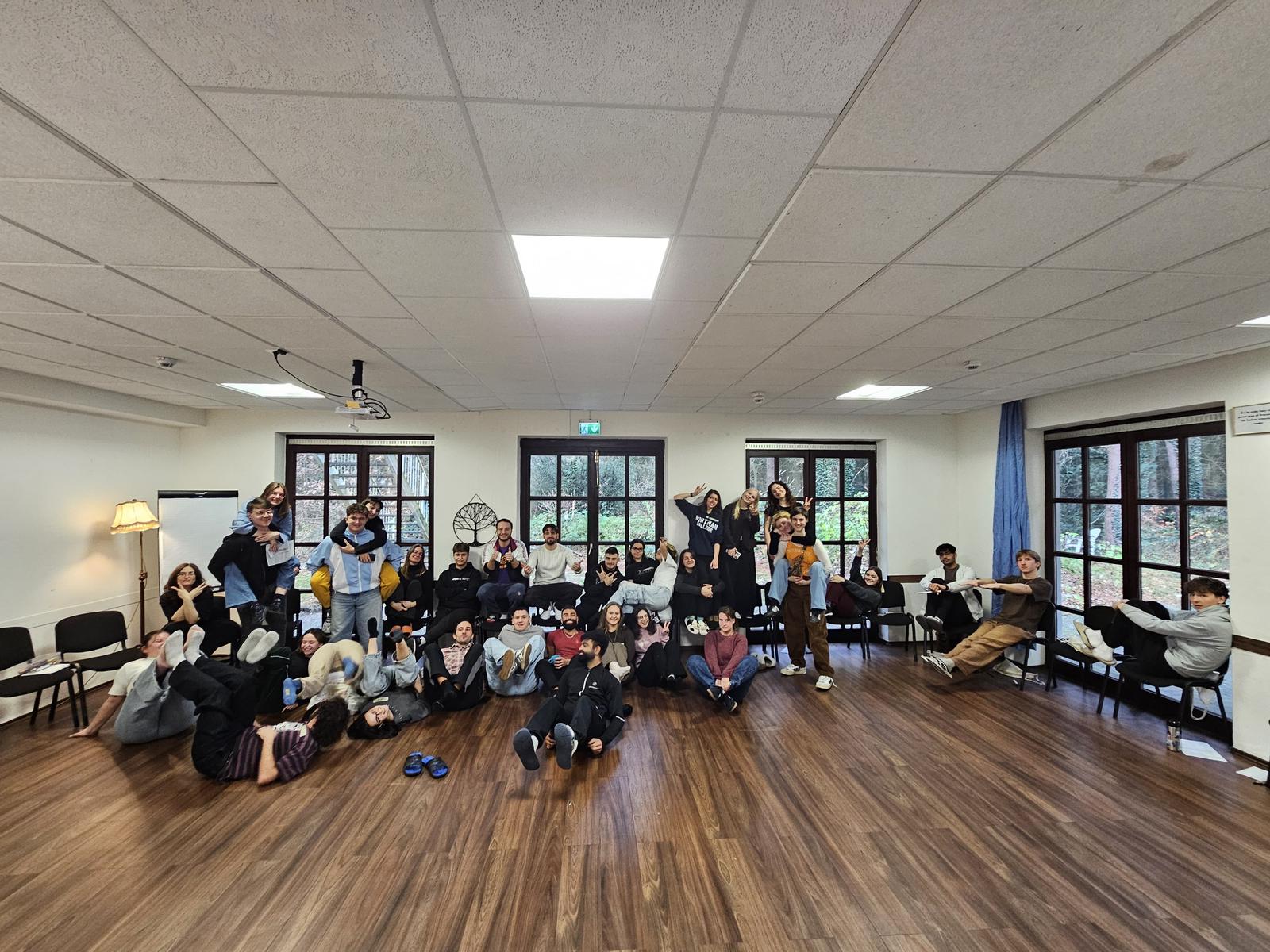
At the start of December, six young people from Macedonia bundled in thick winter coats and a list of their favorite traditional recipes and headed to KulturHaus, a cozy house on the outskirts of Bremen, Germany. Joined by 39 other participants from Italy, Lithuania, Serbia, Spain, and Germany for the Erasmus+ youth exchange “C.O.O.K.”, where they spent ten days cooking meals from each country.
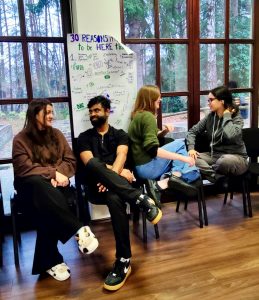
From the moment they arrived, they began to turn the house into a home. Icebreakers quickly turned strangers into friends, from speed-friending, to Mission Impossible, and most notably a walk through the surrounding forest. Walking in pairs along the trail, participants answered questions with a partner and switched at every turn, discovering not only the stunning winter landscape but also the stories behind each person, from favorite movies and books to family traditions and the experiences that made them who they are today.
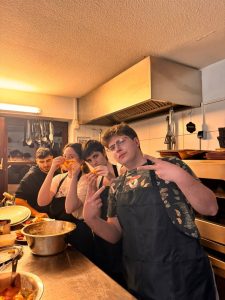
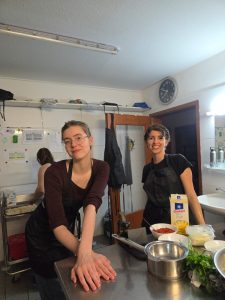
Back at KulturHaus, the kitchen became the heart of the exchange, overflowing with people, flavors, and spices. Every day was devoted to the cuisine of a different country. Participants were divided into “family groups” through an interactive game, with each group containing one person from each nationality. These families became small teams tasked with cooking a full-course meal for the featured country, preparing intercultural nights, or contributing to a digital cookbook noting each recipe that was prepared through the youth exchange.
The day before the final celebration, the Macedonian team took the stage and prepared a six-course meal. The menu featured musaka as the main dish, a traditional seasonal salad, mekici served with an assortment of spreads including ajvar, and, of course, cheese brought all the way from home. Alongside the meal, the team presented 35 facts celebrating 35 years of independence, blending history, humor, and unexpected details that made everyone feel as if they had taken a day trip to the country. The exchange was full of surprises: the Lithuanian cuisine filled the entire house with the strong aroma of garlic; the diverse German team prepared not only traditional German dishes but also Indian and Turkish food to honor each member’s background; and the Italian intercultural night transformed into a lively recreation of the Sanremo Festival, meanwhile the Serbians recreated a traditional wedding celebration.
As the week went on, cooking became more than just a routine; it evolved into another key aspect of the project: storytelling. Each day began with activities designed to develop participants’ storytelling skills, from exercises where pairs communicated while wearing headphones and standing back-to-back, highlighting how much interpretation storytelling requires, to creative group tasks. These tasks brought to life the creation of short plays in different genres, imagining how families might have shared meals across various eras. The results ranged from a Stone Age musical dinner party to a futuristic food drama, along with many other Erasmus+ theatrical masterpieces.
The final day was the highlight of the exchange: participants prepared the six favorite meals from the week, representing every country involved. For one last time, the kitchen buzzed with the familiar rhythm of preparing a feast that captured the spirit of the entire project. As final touches were added, photos snapped for the cookbook, and plates carefully arranged, the group shared their last meal together before a night filled with bittersweet goodbyes. By the end of the week, the December chill outside felt far less noticeable. The warmth came from shared experiences both in and beyond the kitchen, new friendships, and a deeper understanding of culture, transforming a simple house in the German countryside into a home for everyone, from professional cooks to rookie beginners.
Emilija Krstevska
Project partner: NaturKultur e.V.