
In this super-fast, hyper-competitive modern era, it has become essential to cultivate resilience – no longer an extra asset, but a vital skill.
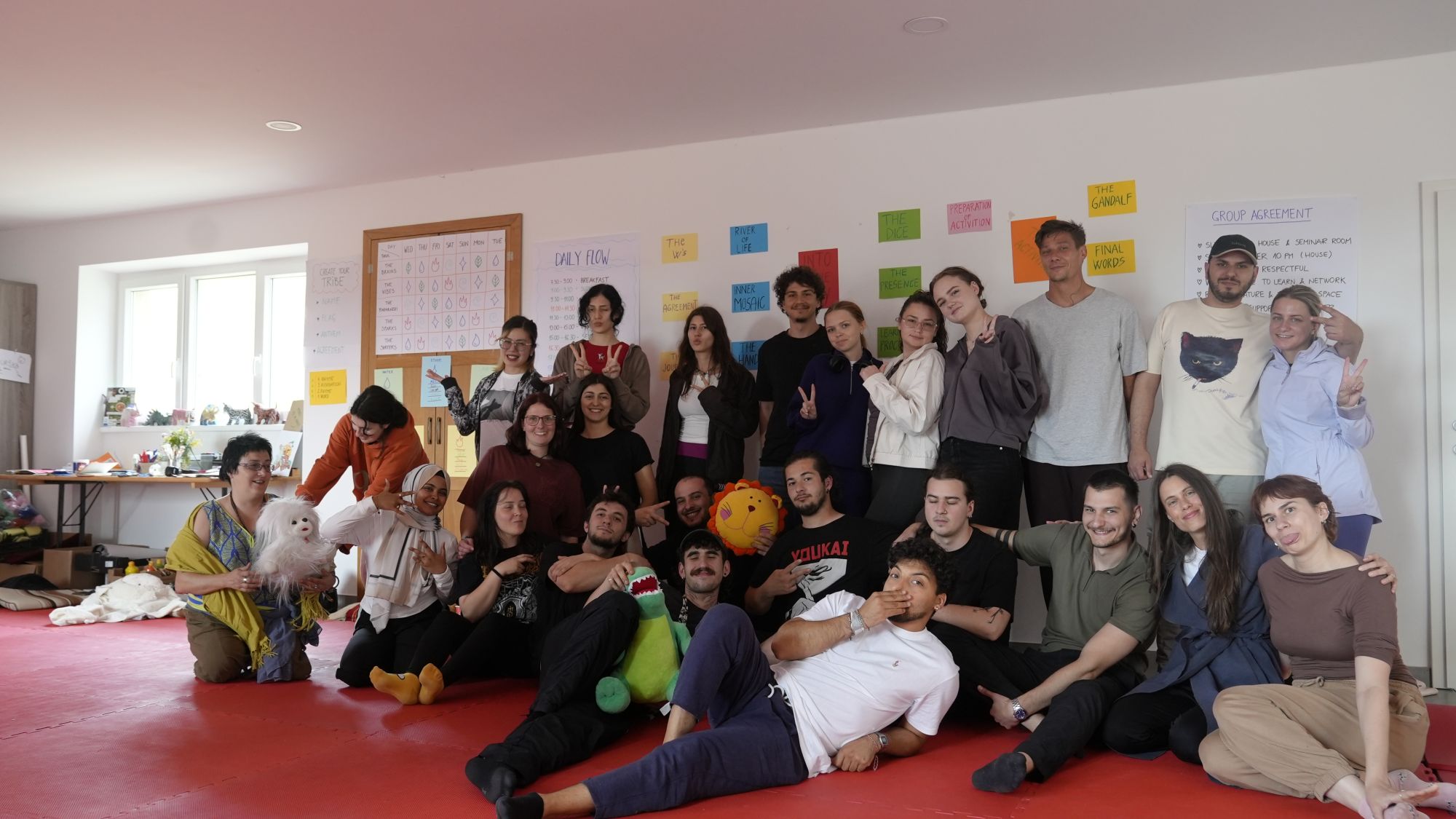
“Let’s get resilient!”, the Erasmus+ training course organized by MC Dravinjske Doline in the picturesque village of Topolovec, Slovenia, did exactly that: over the course of seven days, it provided the participants with tools for cultivating mindfulness and resilience in their personal and professional lives.
But let’s start from the beginning. For those of you who are unfamiliar with the term, resilience is the psychological capacity to adapt to change, endure hardships, and recover from setbacks. Without this skill, the relentless demands of our fast-paced lives could easily lead to anxiety, unaddressed fatigue, and eventually burnout. As much as they have become indispensable to modern life, technological advancements and global connectivity have pushed to multitask, process vast amounts of information instantly, and deal with new situations at a moment’s notice. Those who lack resilience often feel overwhelmed by these constant shifts, experiencing a continuous cycle of frustration and helplessness. At its core, resilience is the ultimate shield against the mental exhaustion of the 24/7 work culture, and those working with youth would sign with both hands that they could do with some more of it!
In the workplace, resilience directly translates to sustained performance and adaptability, and, beyond the office, this mental agility enables us to handle unexpected life events, from economic shifts to personal conflicts, by seeking proactive solutions instead of avoiding the issue.
Since resilience is so paramount for preserving our mental and emotional health while striving for professional and personal growth, the program had high emphasis on awareness of self and other, emotional self-regulation, and efficient communication without assumptions, handing us a bundle of valuable tools.
It was impressive to see meaningful communication know-how and learning about personal and interpersonal boundaries packaged and delivered in the form of playful activities. Although a bit skeptical initially, by participating in the “games” I fast became a believer.
To see where we are at on the resilience continuum, we first had to check our concepts of what resilience is and who/what supports it. Divided in several groups, we drew posters representing resilience as a tree with roots and branches, to come to the following most common answers:
- Resilience is rarely a solitary endeavor: it is intimately tied to community and connection.
- Resilient individuals understand the importance of leaning on their support networks—friends, family, and colleagues—during difficult times.
- By communicating openly and resolving conflicts constructively, they foster healthier, more meaningful long-term relationships, both at and outside work.
- Resilience also strongly depends on self-care: enough sleep, nutritious food, exercise, socialization….
- Resilience also rests on mindfulness – how can one address one’s needs if one is unaware of them? Optimistic outlook on life, positive self-talk, awareness that even the hardest turns are just that – generally impermanent, are all qualities to be cultivated as a good basis for cultivating resilience.
- Resilience is fundamentally a learnable skill. Through the above-mentioned practices of mindfulness, continuous learning, and positive self-talk, anyone can strengthen their mental and emotional flexibility.
Another valuable exercise was a successful “borrow” from the Theatre of the oppressed: divided in pairs we needed to lead / follow / both lead and follow, checking our trust and boundaries in the process. I saw this exercise working on so many levels: establishing trust and communication flow, syncing with your partner, letting go and trusting someone you don’t know well to lead you. It is an excellent “ice-breaker” exercise for establishing connection between people that meet for the first time and need to work together in any capacity. Kudos to our fierce facilitator Klara Pavlic! Kudos to lovely Urshka and Sanja as well! Talk about girl power!
Not intending to underestimate the value of any of the other activities, my personal favourite was the day we got immersed in Somatic Body Practice. The first session was about connecting with oneself: we focused on our inner state and the sensations in our bodies. The second session upped the stakes: while being aware of ourselves, we also needed to forge a connection with a partner. Through a lot of physical movement and verbal or non-verbal interaction with a partner, we got to explore our comfort zones and boundaries once again. The third session the group worked as a whole, and as transformed “human anlimals” (sometimes quite loud, as well), we were showing support for one another.
All activities taught us low-pressure ways to make connection and learn about ourselves, our own needs, and the needs of the others. The whole experience was a great exercise in embracing diversity, not only from a national and ethnical point of view, but also in terms of age. Being the oldest one there, at first I found it difficult to take youth half my age seriously – but soon I saw my prejudice was unfounded, because everyone had something interesting to share and contribute. I highly recommend the use of some of these techniques in any work environment! It’s team building at its best!
Five pages would not suffice if I go into detail about each and every activity. Ultimately, “Let’s get resilient!” succeeded in providing us with tools that empower us to face adversity head on and harness it as a catalyst for future success. Thanks to neuroplasticity, through practicing calm and proactive problem-solving we can all rewire our brains and make resilience our default biological setting, which in turn will help us maintain a healthy work-life balance and safeguard our long-term well-being. Cheers to becoming individuals who view challenges as opportunities for growth! Cheers to resilience!
Julija Petrovska