There is an island on the Mediterranean sea that has a recipe for longevity. Maybe this recipe is connected with the recipe for happiness? It seems like Sardinia has them both, but what if both are actually one and the equation would be simply: happiness=longevity?
One November week in Sardinia can give you a glimpse of how things go on this island. And that it is far beyond the amazing coastline with azure waters and sandy beaches. To understand this, you have to go inland, to the heart of Sardinia, and not just as a tourist but part of a community. People there will be kindly curious. They will ask you questions and understand your answers even when the language barrier occurs. The gestures are beyond any spoken words. And the offerings are in any form you can imagine, and they can give: a smile, a glass of wine, a recipe for malloreddus (which are not gnocchi!), an invitation to one’s home.
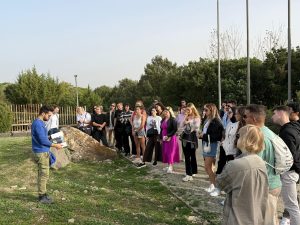
The study visit “VOLume Up!” organised by SIEDAS and TDM2000, taking place from 13 to 19 November in Sardinia, took a group of youth workers on a journey that started in Cagliari. Leaving the familiar and expected by your typical tourist, the seaside, we moved to the places that we can call hidden gems of an island: Nurri, Escolca and Seulo.
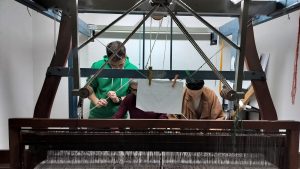
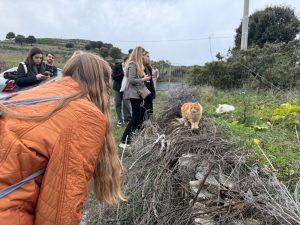
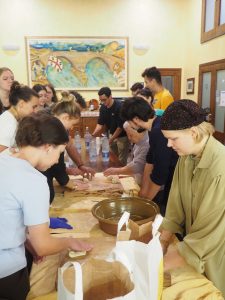
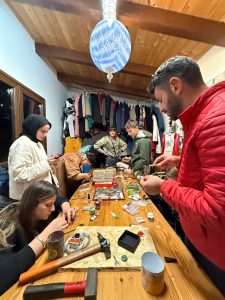
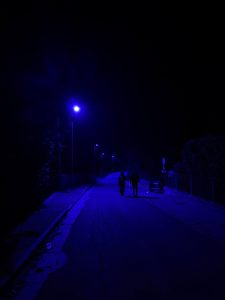
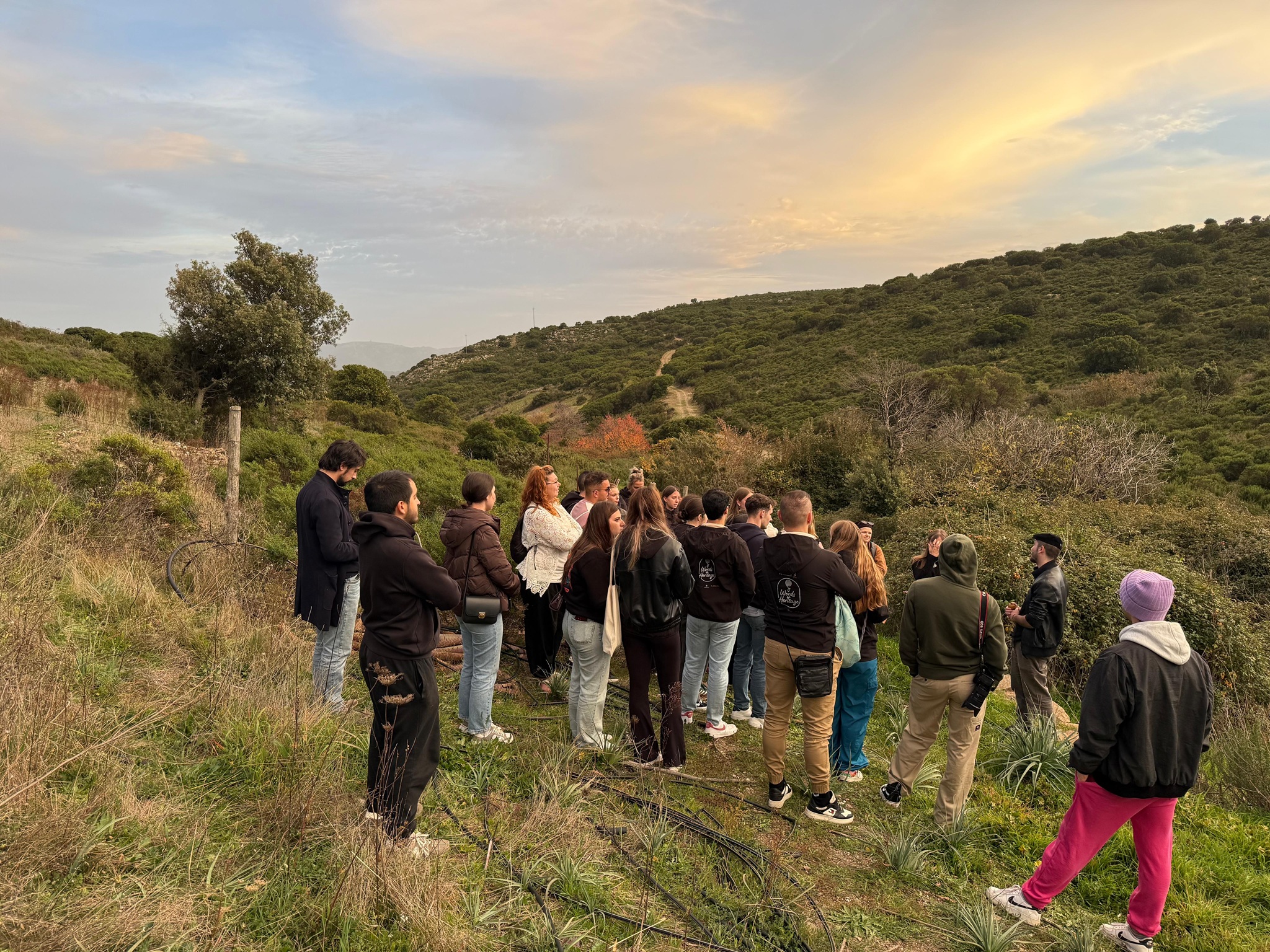
Nurri shared secrets about flour and Sardinian pasta. We visited a flour mill with traditions dating back to 1931. In the hotel located at the lake Lago Basso del Flumendosa, directed by the team of six lady chiefs, we made traditional bread and sweets, and learned the craft of preparing the famous malloredus and fregula, the most typical Sardinian pasta. Escolca offered a degustation of the finest olive oil and let us discover that it can be spicy, which comes as a surprise but is tasty. We were invited to a wine festival and welcomed by the locals like we were just next-door neighbours, becoming a part of the community for merely an evening. We were amazed to learn how the products they offer, from cheese to a slice of pizza, are their passion and pride. Uphill Seulo, we visited an animal sanctuary where we came back to the roots, when humans, animals, and nature are one. Arrexini Asula is an organisation that created this little piece of paradise, where they take care of rescued animals, but they also implement youth education in nature. Downhill, in the village, we learned how a weaving loom works and even tried to make a piece of a rug. We visited a Trashop, which one can enter empty-handed and leave with a precious finding, either left by someone who doesn’t need it any longer or crafted from the materials found in the shop, be it a keychain or earrings. Evening Seulo captured us with blue streetlights. This region of the world is actually one of the blue zones, meaning a place where people live exceptionally long, thus my reference in the introduction to this article.
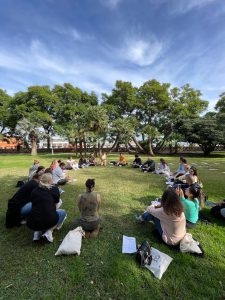
Coming back to Cagliari, we felt like we had already touched the secrets and the wisdom of the island. Yet, it had still more to show. Different organisations in the city opened their doors to us to share their good practices, but also to talk openly about their struggles and hopes for the future. Locanda dei Buoni e Cattivi (Guest house “Good & Bad”) is a place where people from difficult backgrounds are given an opportunity to be reintegrated into society. There, ex-offenders can enter the job market again and learn to empathize through working with people with disabilities. Because everybody deserves a life that is worth living. Sucania is a fair-trade shop, where you can buy a sweet or a small souvenir, made by caring hands, as a promise of respect, justice, and honest work. And such places are important as they send the message that a small choice becomes a small revolution. Unica Radio is a student radio of the University of Cagliari, where by sharing the content about Sardinian culture, students can learn good practices to become future journalists. Giving space to grow for youth is the first step to empowering literacy.
Half of the island we saw left us with a feeling of appetite satisfied, but also a slight hunger for more of what was still undiscovered. But what was the point of this study visit, and where is Erasmus+ in all of this? Why was it important to go deeper, to become part of the community, to hear the stories, to learn how to make pasta? Because cultural heritage is an endless source of inspiration. Because, despite the struggles, there is potential. And we can build on that, to preserve the things that are important. To not be forgotten. We’ve learned good examples of solidarity projects implemented in the rural areas, and we came back inspired. We have seen with our own eyes how cooperation between creativity and kindness can lead to perfect outcomes.
But why did I mention longevity and happiness at the start? Because it is how I first met Sardinia and how it will be remembered. The island welcomed us with a warm embrace. Not rushing but offering a lot in a small time. Inspiring. Teaching how happiness can be found in tiny everyday things. And how we can turn the potential into a project that will keep the circle of inspiration strong. At the end of the day, to be inspired means to be alive.
I give back my warm embrace to Sardinia. Where longevity is just happiness away.
Ewelina Chańska