
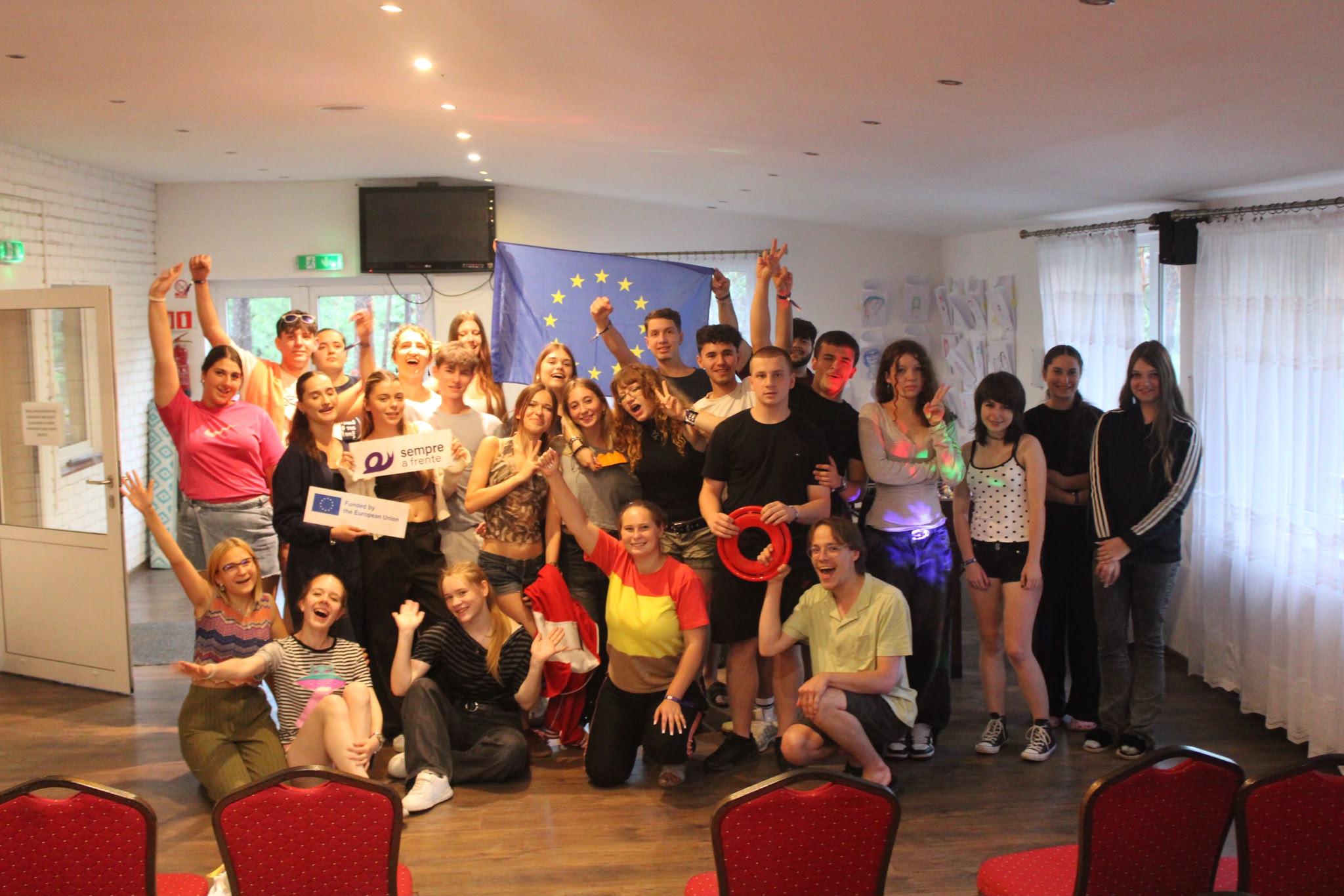
Being a teenager is not always easy. It is a period of discovering who we are, becoming more independent, dealing with expectations from others, and learning how to express what we need and feel. Sometimes, finding the right words can be difficult. Sometimes, we do not even know exactly what we feel. This is why creativity, communication, and openness to new experiences can become powerful tools for navigating these years.
During the Erasmus+ youth exchange “The Forest Stage”, organized by Foundation Sempre a Frente in Janów Lubelski, Poland, from 21 to 29 July 2026, participants from different backgrounds came together to explore these topics through theatre, improvisation, movement, communication exercises, and outdoor activities. Instead of talking about communication and self-expression we were encouraged to experience these topics through activities that challenged us to step outside our comfort zones.
At first, one of our biggest challenges was simply becoming comfortable with people we had just met. We started with creative ice-breaking activities, including a fashion show, where we prepared signs to support the models before taking part in our own increasingly creative runway performances. What seemed like a simple game quickly became a way of building confidence, encouraging spontaneity, and creating connections within the group.
But the real challenge began when we were introduced to improvisation and acting. For many of us, this was completely new. In one activity, we were given a scenario and only one minute to prepare before performing it. The limited preparation time was intimidating, but it forced us to stop worrying about doing everything perfectly. We had to trust our creativity, react to the unexpected, and rely on our teammates.
This idea continued through dancing and body-expression exercises. Sometimes we worked in pairs, with one person leading and the other following; at other times, we had to express a given scenario through movement alone. These activities showed us that communication does not always require words. Body language, movement, facial expressions, and even silence can communicate emotions and intentions.
As we became more comfortable expressing ourselves, we began exploring an important aspect of communication and how to express our feelings and needs clearly. One of the most valuable topics we explored was non-violent communication. We learned to distinguish between facts, feelings, and needs and to communicate them without immediately reacting with anger or confusion. Through practical examples and scenarios, we learned that effective communication is not simply about speaking, but it also requires understanding ourselves and listening to others.
On top of this, an important part of the project was being surrounded by nature. We explored the forest and the surrounding area, participated in water activities, went on scavenger hunts, visited an open-air railway museum, and explored Janów Lubelski. One particularly peaceful experience was a meditation session outdoors, which gave us time to slow down and reflect on our experiences and emotions throughout the project. The combination of physical activities, creative expression, communication exercises, and time in nature encouraged us to think about the relationship between our bodies, emotions, and thoughts.
As a culmination of our project, we were asked to write our own poems, using them as a way to express our thoughts and emotions. Later, we looked for common ideas within our individual poems and transformed them into a longer final play. Starting from separate personal experiences and transforming them into one collective story. Everyone brought something different, but we had to listen, compromise, and find a way to combine our ideas.
When we arrived, improvisation and acting were unfamiliar to many of us. By the end of the project, they had become tools for expressing ourselves, communicating with others, and working together. “The Forest Stage” showed us that learning does not always have to happen through lectures or textbooks. Sometimes, we learn the most by stepping outside our comfort zones, making mistakes, trusting other people, and allowing ourselves to be creative.
The project gave us practical lessons about deep communication, empathy, validating our own and others’ feelings, and understanding our needs and boundaries. Some of these lessons were directly explained, while others were hidden within the activities themselves.
Most importantly, we learned that being open to new experiences can help us discover aspects of ourselves that we did not know were there.
We may have arrived as participants from different countries, cultures, and backgrounds, but through theatre, creativity, communication, and shared experiences, we became a group.
Ana Marija Atanasovska
Project partner: Fundacja Sempre a Frente